NAWM Members
Members receive weekly issues of Insider’s Edition and bimonthly issues of Wetland News per year. If you are a member already, you may read the latest issue of Insider’s Edition and Wetland News (NAWM’s membership newsletter) by logging in to your Members Portal. NAWM membership benefits information.
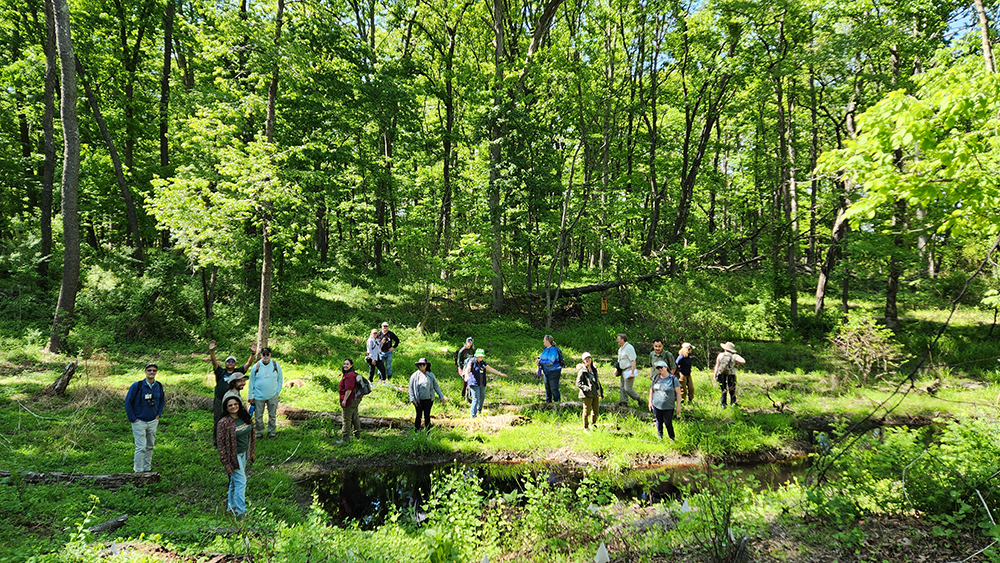
NAWM is looking for photos of our members working in the field—whether inside or outside, regulation or restoration, monitoring & assessment—or mapping & management of wetland resources. We would like to feature photos of wetland professionals doing a wide range of activities in the field of wetland science, policy and management. Please email these photos to Laura at laura@nawm.org for use on the NAWM website and/or in our membership newsletter, Wetland News.
Member Spotlight
The NAWM membership includes state, tribal, federal, and local wetland managers, regulators, researchers, field scientists, academics, private consultants, and more. These wetlanders work across the United States in a wide variety of wetlands and related aquatic resources. To celebrate the important work that NAWM members are doing, each month NAWM shines the Member Spotlight on one member to learn more about the good work they are doing to protect and restore our wetland resources, how they came to work in wetlands, and how being a member of the Association benefits their work. If you would like to nominate a member for a future Member Spotlight, please reach out to Portia Osborne, NAWM Executive Director, at portia@nawm.org. View Member Spotlight Archive.
Nichoel Church
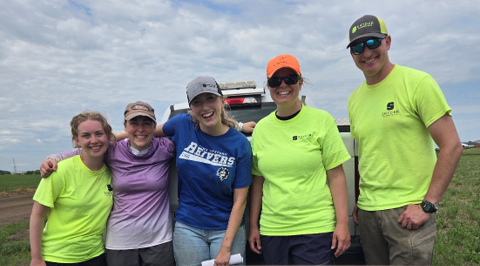
Photo of me + staff + an intern after a day of monitoring a wetland and stream restoration project and after we built our first BDA.
Nichoel Church is an Environmental Scientist with Snyder & Associates, Inc. located in Ankeny, IA.
Who do you work for and what is your current position?
I work for a civil engineering firm called Snyder & Associates, Inc. and we have multiple offices in the Midwest but I’m located in Ankeny, Iowa. As an Environmental Scientist, part of my job to keep our project managers out of “project jail”. What I mean by that is making sure our projects are acquiring all the necessary permits and our designs avoid or minimize impacts to natural resources where possible or mitigating where it’s not possible. We work a lot with federal, state, and local agencies in addition to private landowners.
The other part of my job is improving or restoring streams and wetlands plus monitoring their success, which is my favorite part! I document baseline conditions and performance metrics for our stream restoration projects. I delineate multiple wetland types and classifications using the Midwest and Great Plains Regional Supplements and provide feedback to our design engineers about proposed vegetation, soils, and hydrology improvements. Being a part of successful restoration projects from start to finish is very rewarding. Plus, of all our restoration projects improve water quality which is very much needed in the Midwest.
What is one of your biggest professional accomplishments?
Project-wise, working with my team, including Dr. Emily Fairfax with University of Minnesota, to improve streams using beaver dam analogs as low tech processed based restoration. On their own BDAs improve channel stability, increase groundwater connectivity, create wetlands, slow velocities, decrease erosion, reduce nutrients, improve water quality, provide habitat, and increase biodiversity. It’s a huge accomplishment and I’m excited to help encourage LTPBR where possible and speak about my experience at BeaverCON.
Overall, my biggest professional accomplishment is helping train and mentor professionals and student interns within my company and outside of it, including the MARSH program. We should all try to help each other grow and follow our passions. Being a MARSH mentor is something I take pride in, and I’ve enjoyed getting to know my mentees over the years. Each one is different. Which makes sense because no two wetland professionals or students are the same and that’s something that’s unique about this profession.
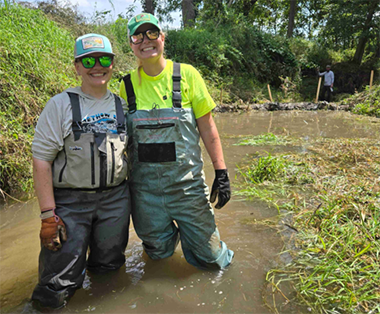
Dr. Emily Fairfax helped our crew of volunteers and encouraged us the entire time!
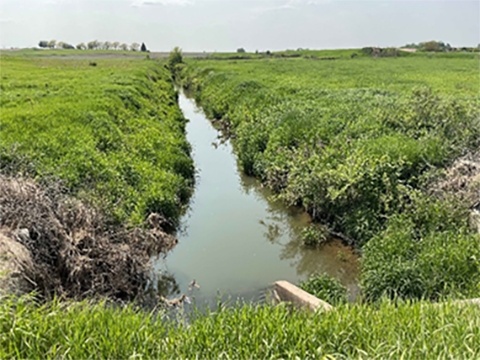
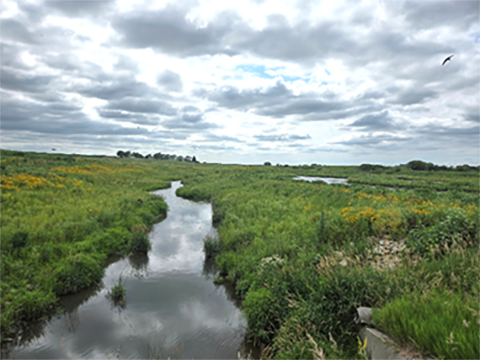
Whistle Stop Mitigation Bank. Jim Creek was historically straightened. Left photo is from May 2023 before construction with sloughing 8-12 foot tall streambanks. Consolidated bottom with no riffles or diverse habitat. Right photo is from June 2026 after construction with less than 2 foot tall banks that are connected to 10 foot wide floodplain benches before sloping gently upward for shallow streambanks to tie into existing ground. Several riffle-pool complexes and diverse habitat. An emergent wetland was restored on the right side of the photo that continues to treat wastewater effluent in addition to runoff from the watershed which is a mix of urban and agriculture.
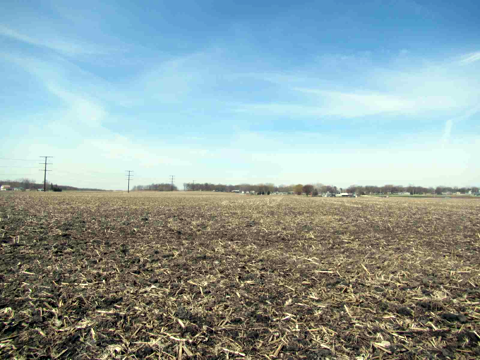
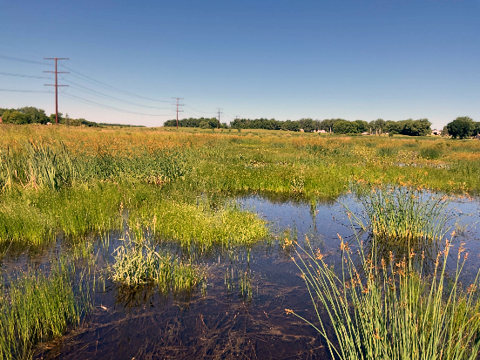
Heineman Wetland Mitigation Bank. Left photo is from April 2018 and right is from June 2026. Emergent wetlands were restored in a portion of a field that was heavily tiled to be able to produce row-crops annually. The landowner struggled with clogged and inundated tile throughout. They had actually stopped farming the southeast corner where it was continuously wet near a railroad ditch and overhead electric right-of-way. Since this project was constructed, the landowner hasn’t had any issues with tile drainage. Restored wetlands filter nutrients from the watershed which is predominantly agriculture. Fun vegetation includes several species of sedges and rushes. My favorite is spikerush because it feels like I’m like walking through Dr. Seuss story in real life.
If you would like to nominate a member for a future Member Spotlight, please reach out to Portia Osborne, NAWM Executive Director, at portia@nawm.org.